Car Care, Hiya Automotive

Why Should You Keep Facial Tissues in Your Car?

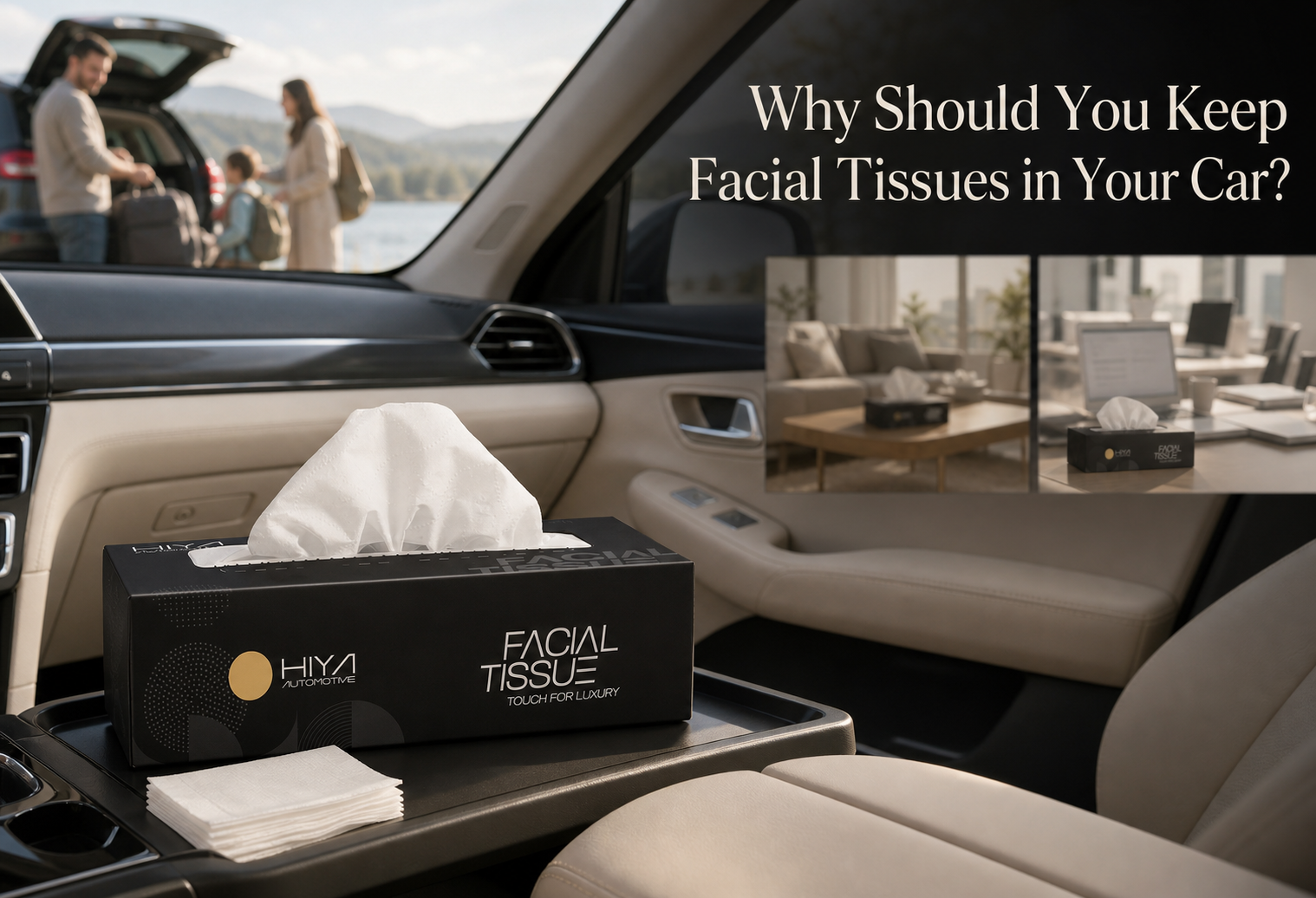
Why Should You Keep Facial Tissues in Your Car?

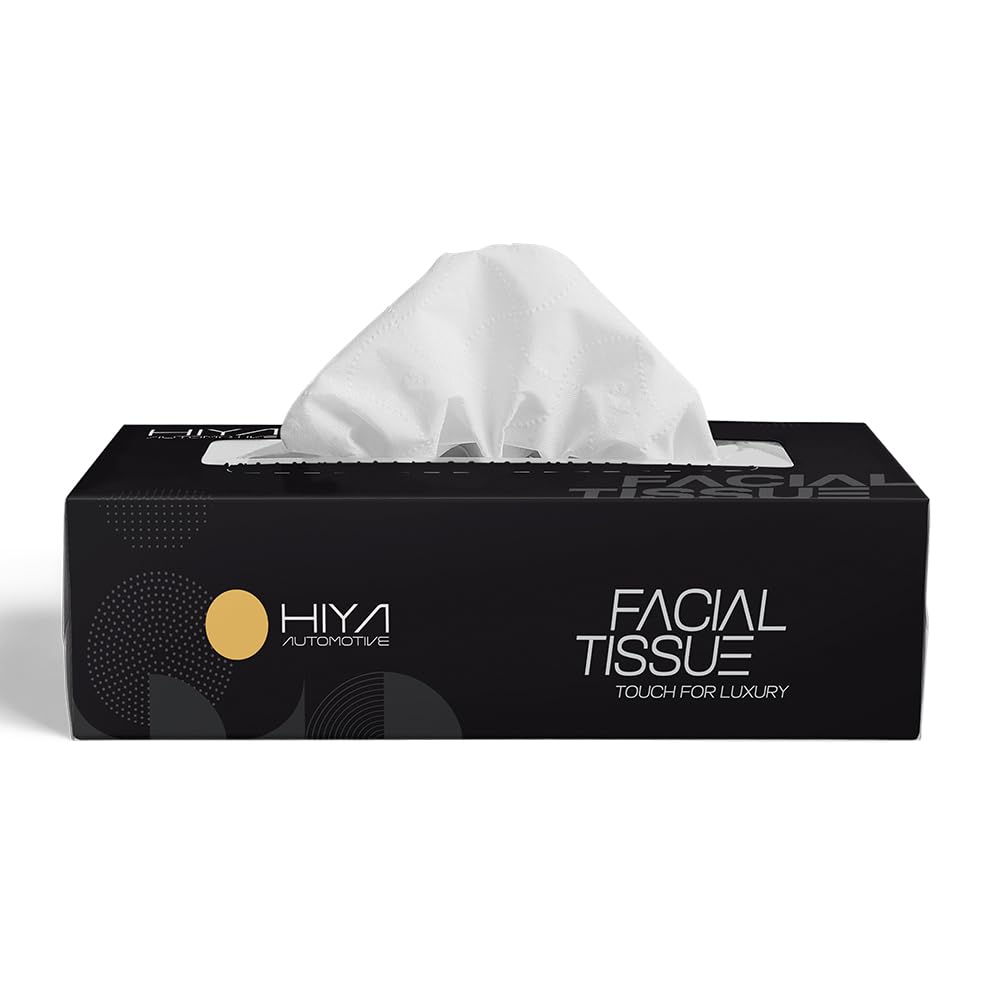
HIYA Automotive Facial Tissues provide a simple way to improve everyday cleanliness and comfort while travelling. The compact boxes contain soft, absorbent tissues that can be kept in a car, home, office or travel bag for quick access whenever they are needed.

Here's what you need to know.

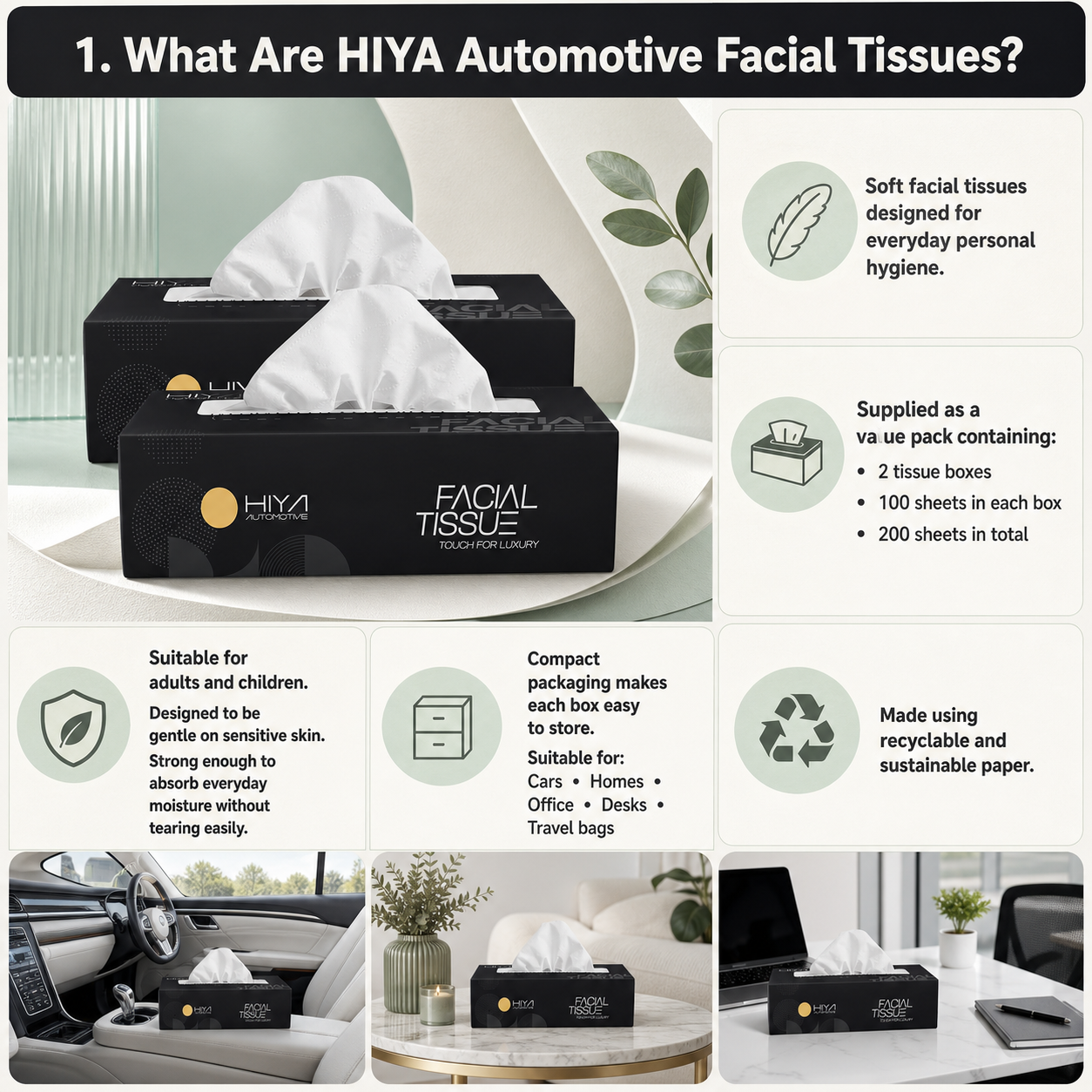
1. What Are HIYA Automotive Facial Tissues?

  • Soft facial tissues designed for everyday personal hygiene.
  • Supplied as a value pack containing:
    • 2 tissue boxes
    • 100 sheets in each box
    • 200 sheets in total
  • Suitable for adults and children.
  • Designed to be gentle on sensitive skin.
  • Strong enough to absorb everyday moisture without tearing easily.

  • Compact packaging makes each box easy to store.
  • Suitable for: Cars, Homes, Office,Desks,Travel bags
  • Made using recyclable and sustainable paper.
1. What Are HIYA Automotive Facial Tissues?
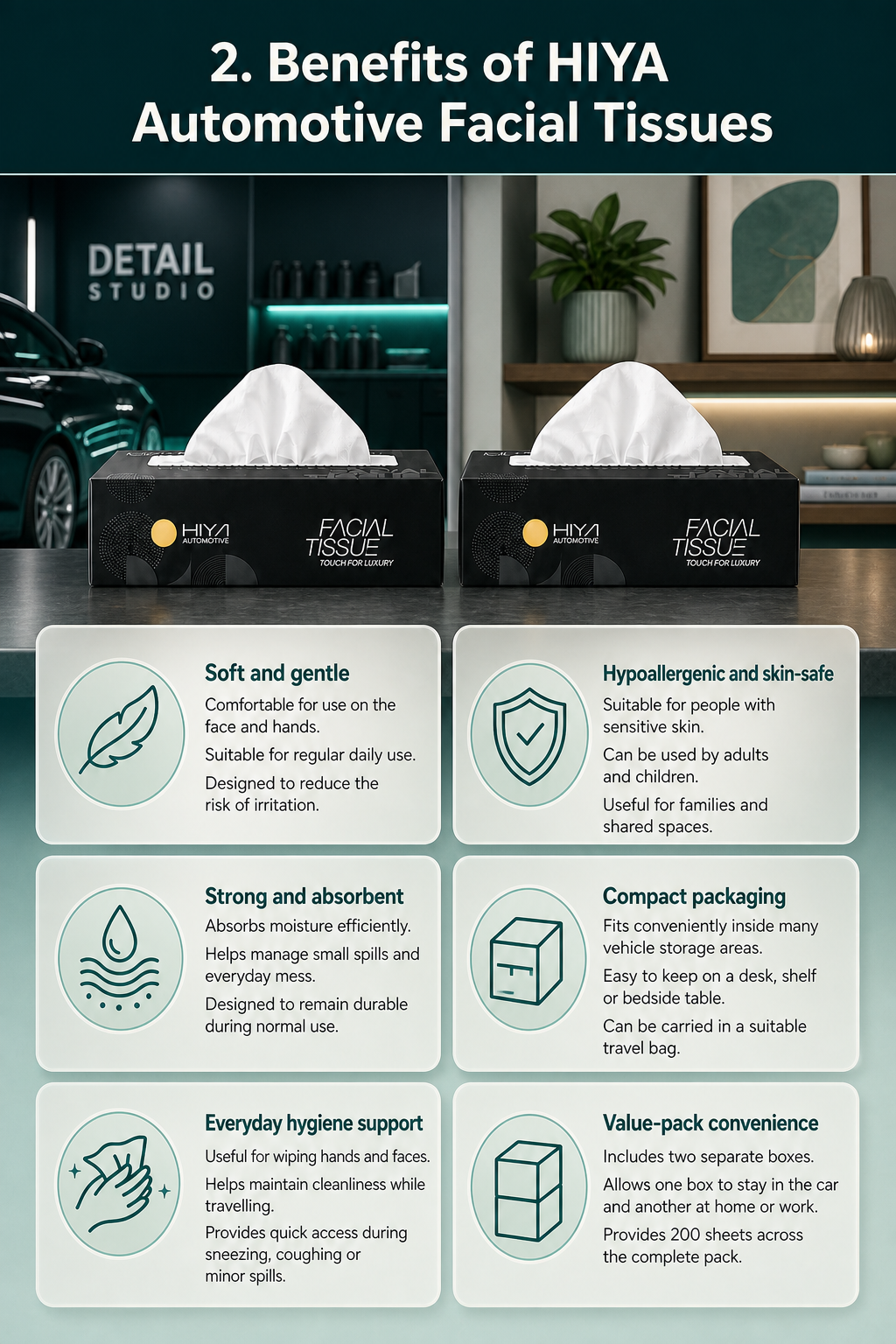
2. Benefits of HIYA Automotive Facial Tissues

2. Benefits of HIYA Automotive Facial Tissues

  • Soft and gentle
    • Comfortable for use on the face and hands.
    • Suitable for regular daily use.
    • Designed to reduce the risk of irritation.
  • Hypoallergenic and skin-safe
    • Suitable for people with sensitive skin.
    • Can be used by adults and children.
    • Useful for families and shared spaces.
  • Strong and absorbent
    • Absorbs moisture efficiently.
    • Helps manage small spills and everyday mess.
    • Designed to remain durable during normal use.
  • Compact packaging
    • Fits conveniently inside many vehicle storage areas.
    • Easy to keep on a desk, shelf or bedside table.
    • Can be carried in a suitable travel bag.
  • Everyday hygiene support
    • Useful for wiping hands and faces.
    • Helps maintain cleanliness while travelling.
    • Provides quick access during sneezing, coughing or minor spills.
  • Value-pack convenience
    • Includes two separate boxes.
    • Allows one box to stay in the car and another at home or work.
    • Provides 200 sheets across the complete pack.

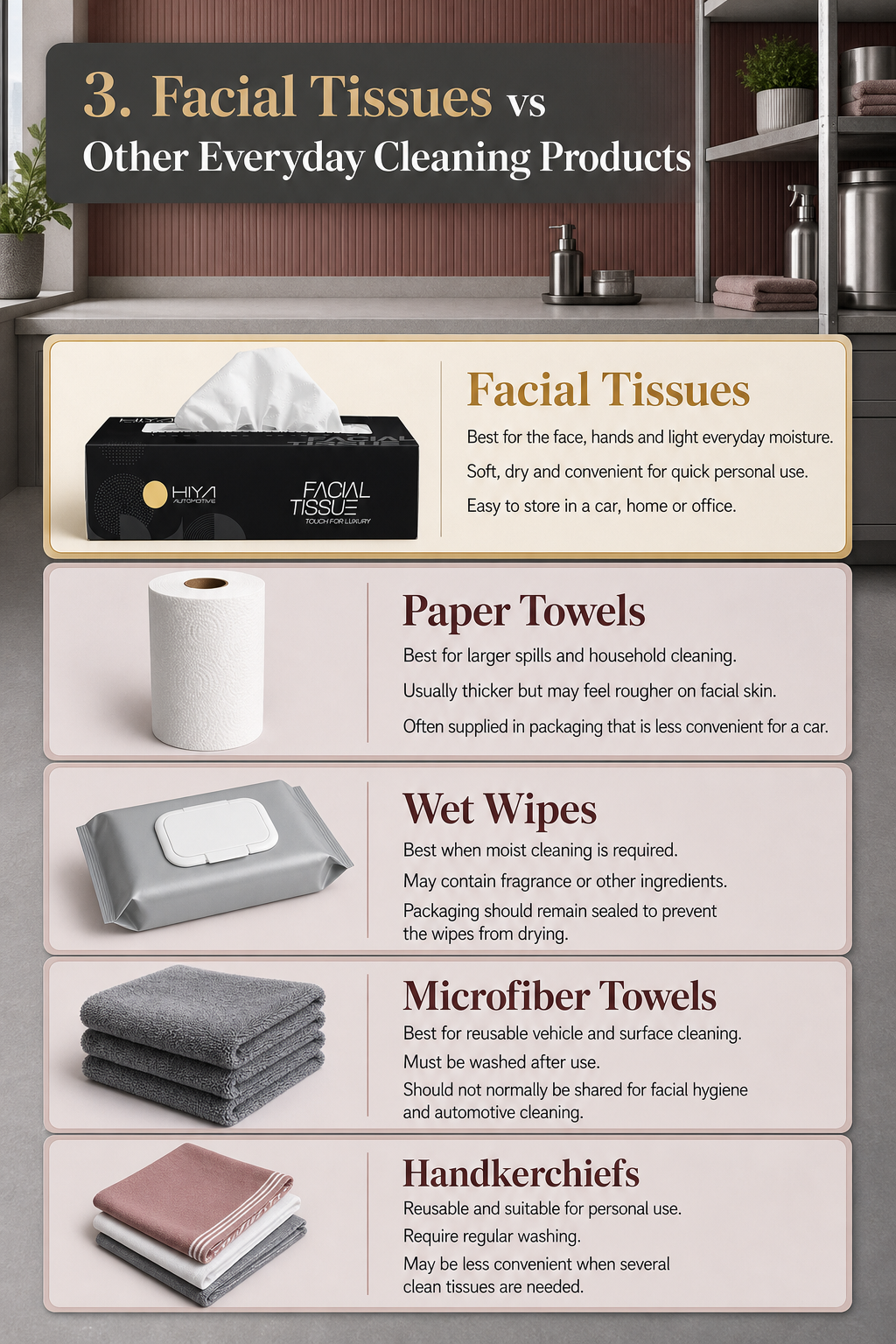
3. Facial Tissues vs Other Everyday Cleaning Products

  • Facial Tissues
    • Best for the face, hands and light everyday moisture.
    • Soft, dry and convenient for quick personal use.
    • Easy to store in a car, home or office.
  • Paper Towels
    • Best for larger spills and household cleaning.
    • Usually thicker but may feel rougher on facial skin.
    • Often supplied in packaging that is less convenient for a car.
  • Wet Wipes
    • Best when moist cleaning is required.
    • May contain fragrance or other ingredients.
    • Packaging should remain sealed to prevent the wipes from drying.
  • Microfiber Towels
    • Best for reusable vehicle and surface cleaning.
    • Must be washed after use.
    • Should not normally be shared for facial hygiene and automotive cleaning.
  • Handkerchiefs
    • Reusable and suitable for personal use.
    • Require regular washing.
    • May be less convenient when several clean tissues are needed.
3. Facial Tissues vs Other Everyday Cleaning Products
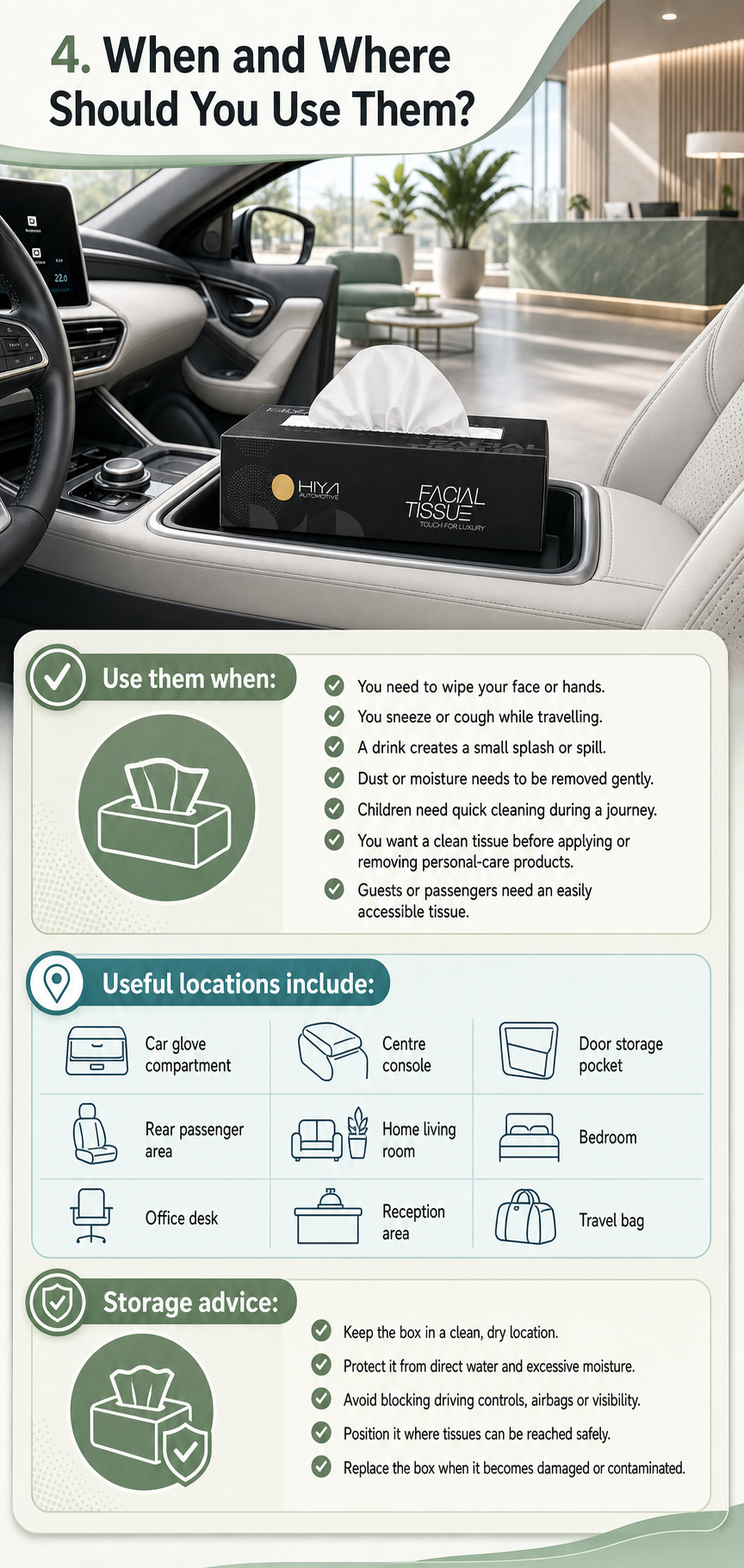
4. When and Where Should You Use Them?

4. When and Where Should You Use Them?

  • Use them when:
    • You need to wipe your face or hands.
    • You sneeze or cough while travelling.
    • A drink creates a small splash or spill.
    • Dust or moisture needs to be removed gently.
    • Children need quick cleaning during a journey.
    • You want a clean tissue before applying or removing personal-care products.
    • Guests or passengers need an easily accessible tissue.
  • Useful locations include:
    • Car glove compartment
    • Centre console
    • Door storage pocket
    • Rear passenger area
    • Home living room
    • Bedroom
    • Office desk
    • Reception area
    • Travel bag
  • Storage advice:
    • Keep the box in a clean, dry location.
    • Protect it from direct water and excessive moisture.
    • Avoid blocking driving controls, airbags or visibility.
    • Position it where tissues can be reached safely.
    • Replace the box when it becomes damaged or contaminated.

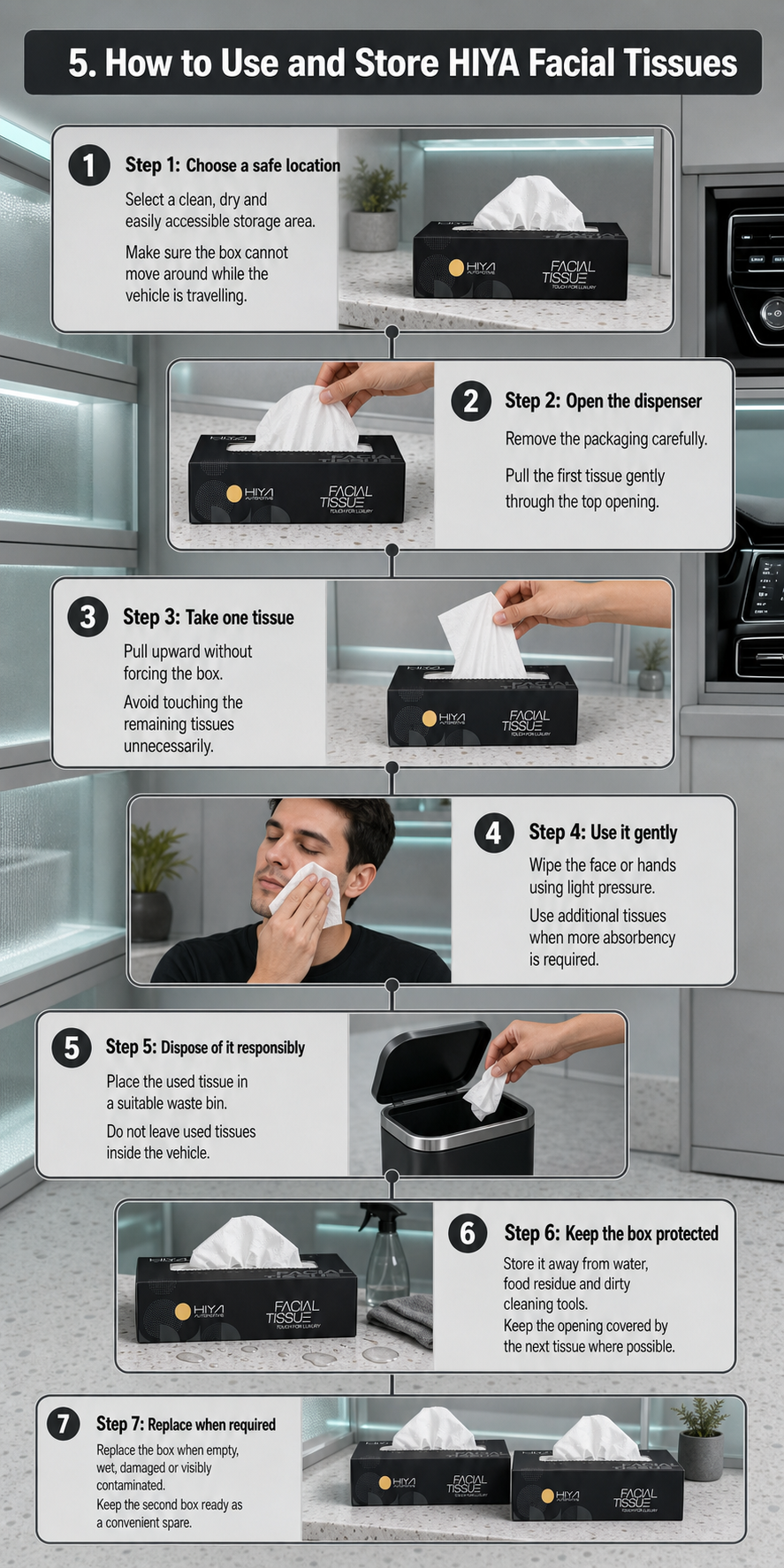
5. How to Use and Store HIYA Facial Tissues

  • Step 1: Choose a safe location
    • Select a clean, dry and easily accessible storage area.
    • Make sure the box cannot move around while the vehicle is travelling.
  • Step 2: Open the dispenser
    • Remove the packaging carefully.
    • Pull the first tissue gently through the top opening.
  • Step 3: Take one tissue
    • Pull upward without forcing the box.
    • Avoid touching the remaining tissues unnecessarily.
  • Step 4: Use it gently
    • Wipe the face or hands using light pressure.
    • Use additional tissues when more absorbency is required.
  • Step 5: Dispose of it responsibly
    • Place the used tissue in a suitable waste bin.
    • Do not leave used tissues inside the vehicle.
  • Step 6: Keep the box protected
    • Store it away from water, food residue and dirty cleaning tools.
    • Keep the opening covered by the next tissue where possible.
  • Step 7: Replace when required
    • Replace the box when empty, wet, damaged or visibly contaminated.
    • Keep the second box ready as a convenient spare.
5. How to Use and Store HIYA Facial Tissues
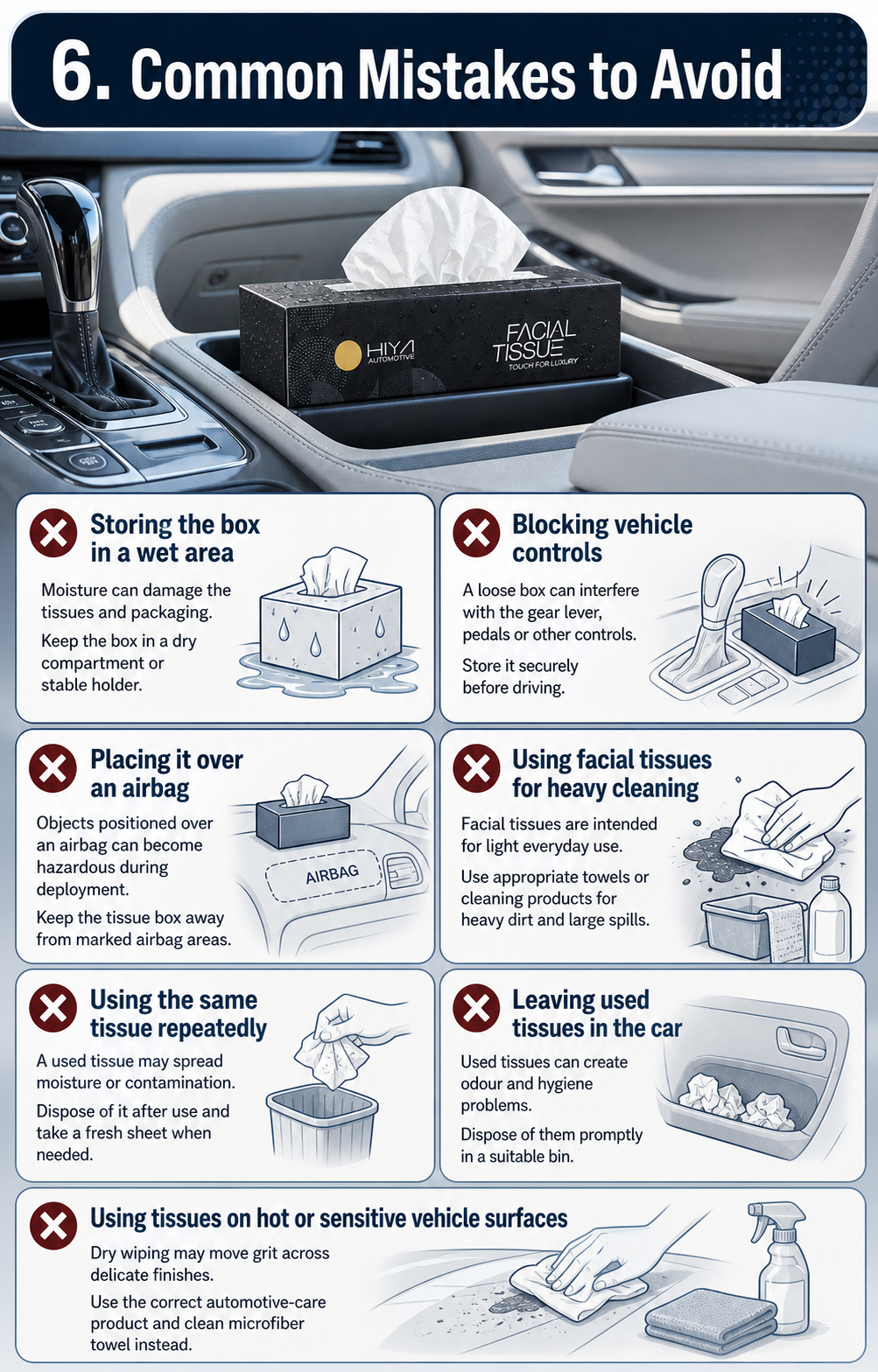
6. Common Mistakes to Avoid

6. Common Mistakes to Avoid

  • Storing the box in a wet area
    • Moisture can damage the tissues and packaging.
    • Keep the box in a dry compartment or stable holder.
  • Blocking vehicle controls
    • A loose box can interfere with the gear lever, pedals or other controls.
    • Store it securely before driving.
  • Placing it over an airbag
    • Objects positioned over an airbag can become hazardous during deployment.
    • Keep the tissue box away from marked airbag areas.
  • Using facial tissues for heavy cleaning
    • Facial tissues are intended for light everyday use.
    • Use appropriate towels or cleaning products for heavy dirt and large spills.
  • Using the same tissue repeatedly
    • A used tissue may spread moisture or contamination.
    • Dispose of it after use and take a fresh sheet when needed.
  • Leaving used tissues in the car
    • Used tissues can create odour and hygiene problems.
    • Dispose of them promptly in a suitable bin.
  • Using tissues on hot or sensitive vehicle surfaces
    • Dry wiping may move grit across delicate finishes.
    • Use the correct automotive-care product and clean microfiber towel instead.

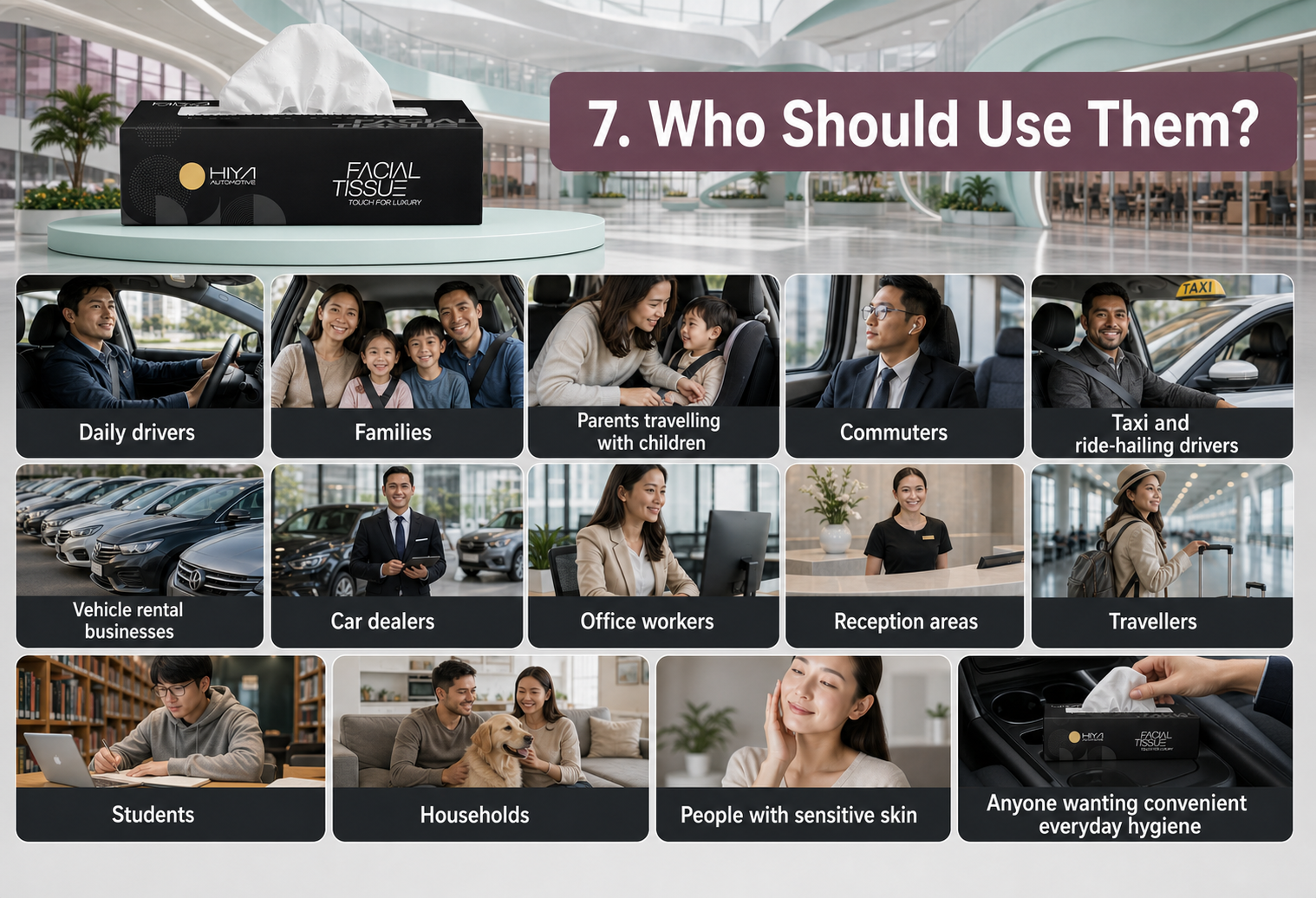
7. Who Should Use Them?

  • Daily drivers
  • Families
  • Parents travelling with children
  • Commuters
  • Taxi and ride-hailing drivers
  • Vehicle rental businesses
  • Car dealers
  • Office workers
  • Reception areas
  • Travellers
  • Students
  • Households
  • People with sensitive skin
  • Anyone wanting convenient everyday hygiene
7. Who Should Use Them?

Conclusion

  • Improve Ride Comfort – Smooth out bumps and reduce vibrations for a more enjoyable drive.
  • Enhance Stability – Reduce body roll and maintain better control, especially at high speeds or sharp turns.
  • Protect Suspension System – Extend the lifespan of costly suspension components.
  • Handle Heavy Loads – Prevent sagging and maintain proper ride height when fully loaded.
  • Cost-Effective Upgrade – A small investment with long-term savings on repairs and maintenance.

Leave a Reply